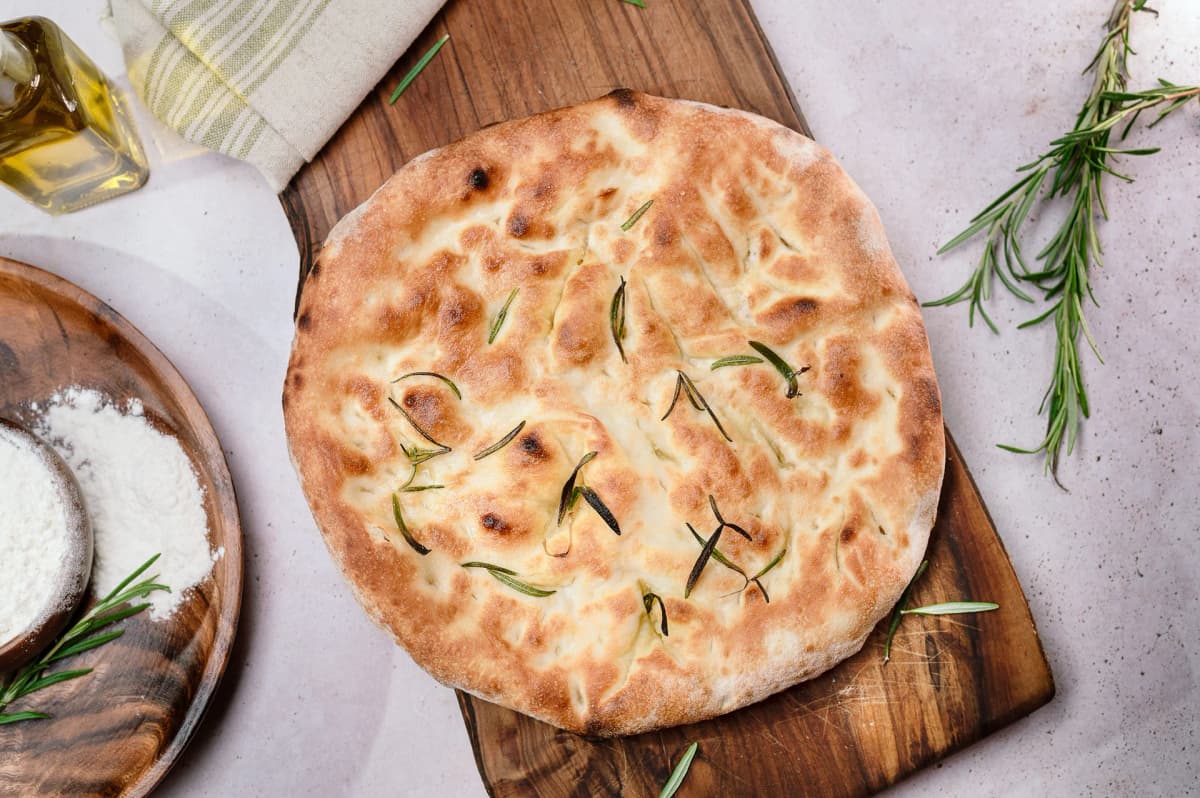
The science of the dough: alveoli, brine, and olive oil
The Focaccia is not just a simple flatbread or a thick pizza dough; it is a true work of culinary engineering based on the balance of four fundamental elements: soft wheat flour, water, sea salt, and Extra Virgin Olive Oil (EVOO) from the first cold pressing.
Unlike other rustic breads where a dry crumb and hard crust are sought, the focaccia from Genoa achieves its unmistakable texture thanks to a very specific technical process:
1. The multi-stage fermentation and resting
The dough requires a slow kneading and a prolonged fermentation period that can exceed 12-24 hours. This slow maturation degrades the complex sugars in the flour, resulting in an extremely elastic, light, and easy-to-digest dough.
2. The work of the fingers: the dimples (occhi)
Once the dough is spread on the baking tray, the master baker performs a ritual maneuver: he firmly and decisively presses the tips of his fingers all over the surface. This technique creates deep grooves or cavities called occhi (eyes). This is not an aesthetic decoration; these small pools are designed to trap and retain liquids during baking.
3. The magical brine (salamoia)
Just before entering the oven, a liquid emulsion of warm water, coarse sea salt, and abundant extra virgin olive oil is poured over the risen dough. This mixture floods the dimples (occhi).
During baking at high temperatures (between 230 °C and 250 °C).
-
The water from the brine creates steam, preventing the surface of the dough from drying out or burning.
-
The olive oil gently fries the upper edges, creating a golden and extremely crispy outer layer (scrocchiarella).
-
The dimples concentrate moisture and salty flavor, leaving a fluffy, tender, and deeply aromatic interior.
A daily ritual
In Genoa, the fügássa does not belong to a single hour of the day; it is a lifestyle that accompanies the rhythm of the city:
-
The traditional breakfast: In the bars of Liguria, it is common to start the morning by dipping a strip of freshly baked warm Genovese Focaccia directly into the café latte (caffelatte). The combination of the salty oil and the sweet bitterness of the coffee is a local classic.
-
The midday appetizer: Accompanied by a glass of fresh white wine (un ombra de vin, like a Vermentino) and some Taggiasca olives.
-
At the dining table: Served in strips to accompany the traditional charcuterie board, aged cheeses like Parmigiano, or to clean the plate at the end of the meal.
The artisanal bread of the house at ROSSINI
At the restaurant ROSSINI, under the neoclassical arches of the Plaza Real in Barcelona, Focaccia is baked daily respecting the fermentation times and the generous use of extra virgin olive oil.
Served freshly made, its golden crust and juicy crumb make it an indispensable accompaniment for:
-
Accompanying antipasti of cured meats and fresh mozzarella.
-
Enjoying alongside a Beef Carpaccio or a dish of melted cheese.
-
Practicing the endearing ritual of scarpetta (dipping the bread in the juicy homemade pasta sauces).
Sitting on the terrace of ROSSINI at dusk near the Gothic Quarter and savoring a portion of warm Focaccia alongside an appetizer is the best way to travel sensorially to the Ligurian coast from the heart of Barcelona.
