The Origin of a Perfect Emulsion
The history of gazpacho dates back to Roman times, when farmers prepared a basic mix of stale bread, water, garlic, olive oil, and vinegar in wooden mortars to replenish their energy during harvest days under the sun.
With the arrival of tomatoes and peppers from America in the 16th century, the recipe evolved into the emulsified cold soup we know today.
The Science of Balance: Tomato, Extra Virgin Olive Oil, and Emulsion
The secret to a good gazpacho lies not in the complexity of its preparation, but in the quality of its ingredients and the physics of its emulsion:
-
The Ripe Tomato: Provides the water base, vibrant red color, and natural sweet acidity.
-
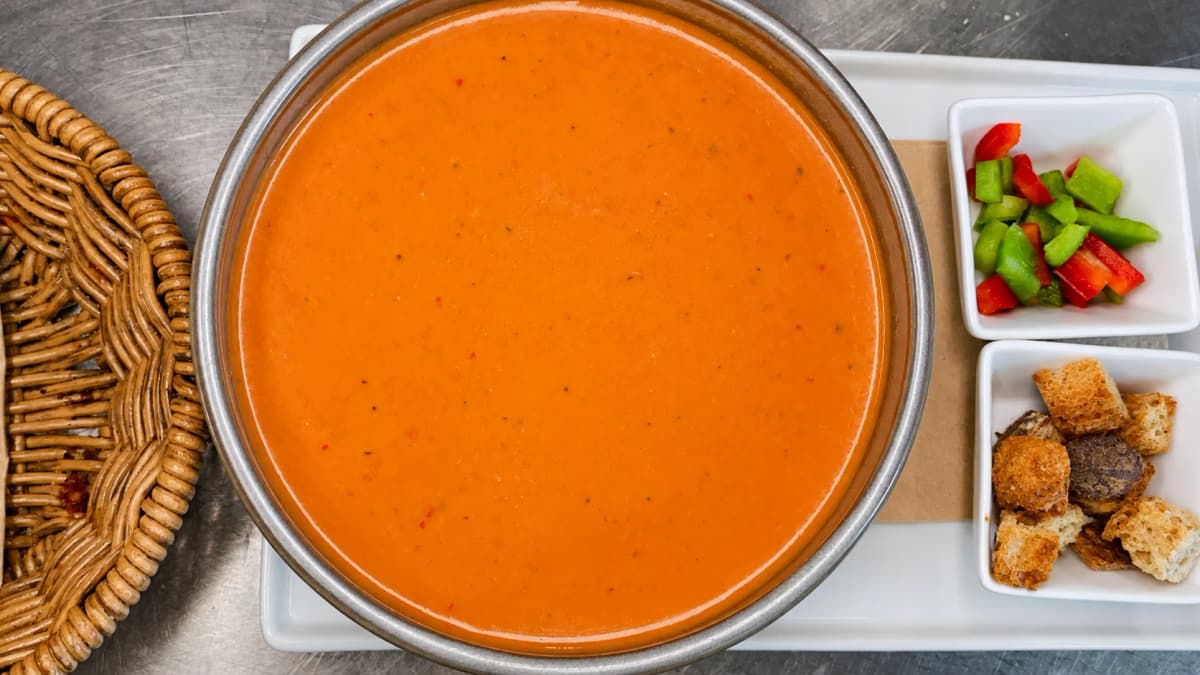
The Extra Virgin Olive Oil (EVOO): When blended at high speed with the tomato, pepper, cucumber, and vinegar, the oil emulsifies, creating a creamy, silky, and shiny texture without the need for dairy.
-
The Counterpoint of Vinegar and Garlic: Adds the sharp freshness that stimulates appetite and aids digestion.
Summer Freshness at ROSSINI
At the ROSSINI restaurant, located in the iconic Plaza Reial in Barcelona, the culinary proposal celebrates the best products from the Mediterranean garden. Served very cold as a refreshing first course, gazpacho is the favorite choice of diners looking for a light, healthy, and natural alternative before enjoying homemade pasta or freshly baked pizza.
Enjoying a bowl of well-chilled gazpacho on the terrace of ROSSINI, under the shade of the historic arches of the Gothic Quarter, is the best way to combat the Mediterranean heat right in the heart of the city.
