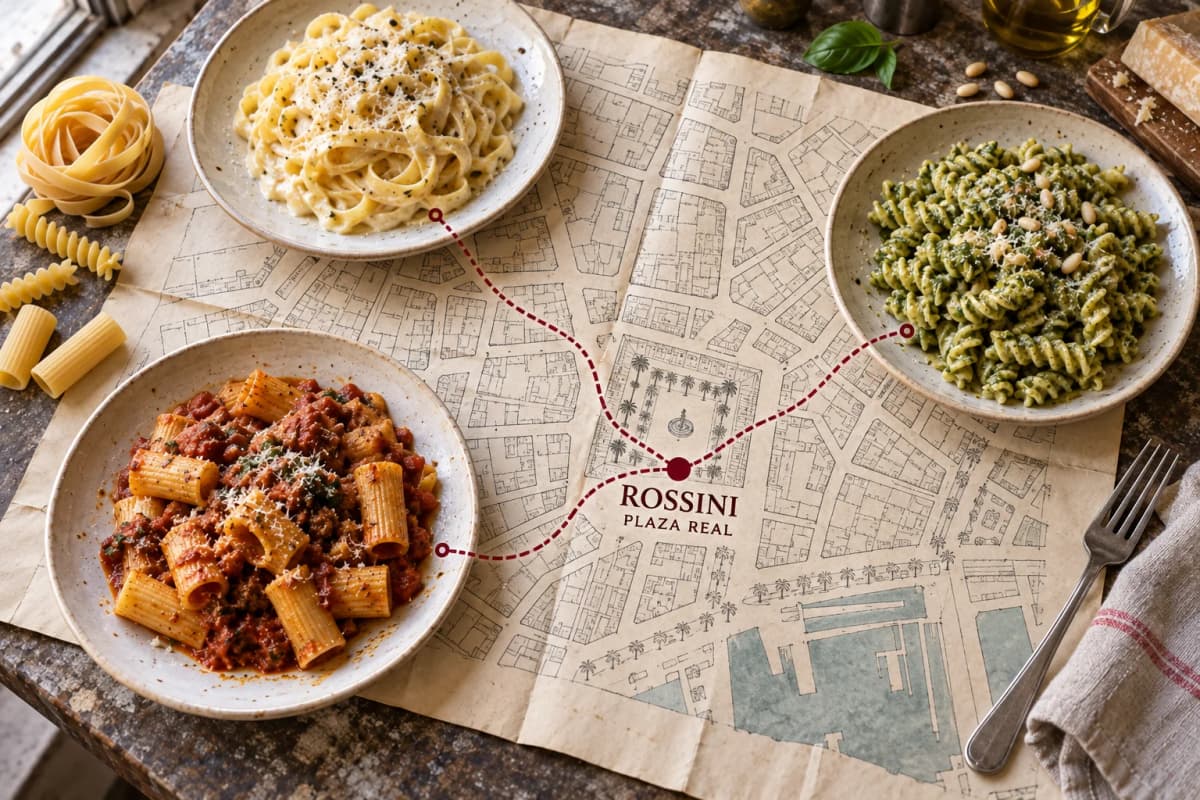
The Law of Physics on the Plate: How Do Pasta and Sauce Pair?
To understand why a well-executed pasta recipe is so addictive, it’s necessary to look at the dish with the eyes of an engineer. The science behind Italian cooking analyzes three key variables before uniting the dough with the pan: the contact surface, the cavity capacity, and the density of the sauce.
-
Long and Thin (Spaghetti, Capellini):
Cylindrical, smooth, and low surface area. Ideal for liquid, fluid sauces based on oil or broth. (Classic example: Aglio, olio e peperoncino)
-
Long and Wide (Tagliatelle, Pappardelle):
Flat ribbon with a large friction area. Ideal for creamy, emulsified sauces or concentrated ragùs. (Classic example: Tagliatelle ai funghi / Ragù)
-
Short and Striated (Penne Rigate, Rigatoni):
Hollow tube with exterior channels. Ideal for dense, hearty sauces with chunks of meat or vegetables. (Classic example: Penne Bolognese)
-
With Cavities (Orecchiette, Conchiglie):
Shell or concave dome shape. Ideal for sauces with small obstacles. (Classic example: Conchiglie with vegetables)
1. Tubular and Striated Pastas: The True Sauce Catchers
Short shapes like Penne or Rigatoni are designed with a dual mechanical function that goes far beyond the visual:
-
The exterior striations (rigate):
Create microchannels along the piece where lighter sauces or the emulsion of oil and cheese adhere due to surface tension instead of sliding to the bottom of the plate.
-
The interior tube and the beveled cut:
Acts as a retention chamber where chunks of minced meat, sautéed vegetables, or pieces of tomato are naturally trapped in each bite.
For this historical and scientific reason, an authentic Bolognese sauce does not express its true potential over smooth spaghetti — where the minced meat inevitably slides and accumulates at the bottom — but rather over a plate of Penne Bolognese. The diagonal cut shape of the penne acts like a tiny spoon that collects the meat with each forkful.
2. Long and Flat Pastas
Long and wide cuts like Tagliatelle or Pappardelle present a wide flat contact surface. Their width is designed to hold the viscosity of sauces based on butter, cream, mushrooms, or ragùs reduced for hours. The fat from the sauce is evenly distributed along the pasta ribbon while twirling the fork.
On the opposite end, very thin long cylindrical pastas only accept emulsification with almost liquid sauces based on extra virgin olive oil or cooking juices. A heavy ingredient or a chunk of meat on a thin noodle would end up breaking the structure of the pasta or falling off before reaching the mouth.
3. The Dough and Molds
Beyond the exterior geometry, the best-kept secret of quality Italian pasta lies in the molding or extrusion process. Pasta produced purely industrially often uses Teflon-coated molds, a non-stick material that speeds up manufacturing but leaves a completely smooth, shiny, and slippery surface.
In contrast, traditional pasta made with bronze dies acquires a porous, matte, and rough texture to the touch. This almost microscopic porosity is the invisible net that traps the sauce and allows the starchy cooking water to emulsify in the pan, creating that characteristic silky texture.
The Chemistry of Al Dente: Why the Firm Center Changes Everything
Asking for or cooking pasta al dente is not an elitist refinement; it’s pure food chemistry. When durum wheat pasta is cooked for the precise amount of time, the protein (gluten) forms a firm network that encapsulates the starch granules in the center of the grain.
Cooking pasta al dente provides three decisive advantages:
-
Optimal Digestion: By maintaining the structure of the starch partially firm, the body takes longer to break down carbohydrates, avoiding spikes in blood sugar and promoting lighter digestion.
-
The Final Sauté (il mantecato): Allows finishing the cooking during the last minute directly in the pan with the sauce. During that extra minute, the pasta gradually releases the starch from its outer layer, binding the sauce with the cooking water without the need to add artificial thickeners.
-
Texture and Identity: Provides a pleasant resistance to the bite that forces you to chew slowly, multiplying the perception of aromas in the retronasal palate.
Plaça Reial in Barcelona: The Perfect Setting for the Italian Ritual
Understanding this fascinating relationship between physics, geometry, and cooking times is what transforms an ordinary meal into a memorable experience. And few places in Barcelona capture the spirit of a tranquil sobremesa better than the historic Plaça Reial.
Under the majestic 19th-century arcades of the square, just steps from Las Ramblas and the cultural energy of the Gran Teatre del Liceu, the restaurant ROSSINI pays tribute every day to this culinary tradition.
In a warm, welcoming, and distinctly Mediterranean atmosphere, ROSSINI’s proposal turns the knowledge of tradition into the pillar of its cuisine. Here, every combination of pasta and sauce follows its natural logic: from its acclaimed Penne Bolognese where the tubular pasta embraces a slowly cooked meat sauce to its fresh pasta recipes sautéed on the spot under the supervision of Italian technique.
Whether to take a break during a stroll through the Gothic Quarter, to enjoy a group dinner before a theater performance, or simply to reconnect around a table without looking at the clock, ROSSINI offers the ideal refuge to discover why authentic Italian cuisine is an art meant to be shared calmly.
Three Chef Secrets to Apply in Your Kitchen
If you want to bring this culinary physics to your everyday dishes, keep these three golden rules that apply in kitchens across Italy:
-
The Liquid Gold of Cooking Water: Never drain the pasta letting all the water go down the sink. Always reserve a pot of boiling water loaded with starch. Adding a couple of tablespoons to the pan while sautéing the pasta with the sauce is the secret to creating a creamy emulsion without using cream.
-
Finish the Pasta INSIDE the Pan: Plating the white pasta and pouring the sauce on top as if it were a topping is one of the most common mistakes. Turn off the heat of the pasta one minute before indicated and transfer it directly to the pan with the hot sauce so that it absorbs the flavor during the last seconds.
-
Evaluate the Weight of the Ingredients: If your sauce has large chunks (minced meat, roasted vegetables, cubes of melted cheese), always go for short pastas with striations or cavities. Reserve long pastas exclusively for fluid sauces, homogeneous creams, or preparations based on oil and aromatic herbs.
Sources:
- https://mangiawithnonna.com/the-science-of-sauce-how-to-pair-the-perfect-italian-pasta/
- https://worldofpastabilities.com/blogs/noodle-notes/why-does-pasta-shape-matter
- https://www.chefstop.ca/blogs/guides/bronze-vs-teflon-dies-a-chefs-guide-to-perfect-pasta-texture
- https://www.ampto.com/blogs/learning-center/why-bronze-pasta-dies-matter-tradition-texture-and-perfect-sauce-adhesion
- https://glycemicsnap.com/blog/pasta-and-blood-sugar
- https://www.delish.com/food/a71337945/healthiest-way-to-cook-pasta/
