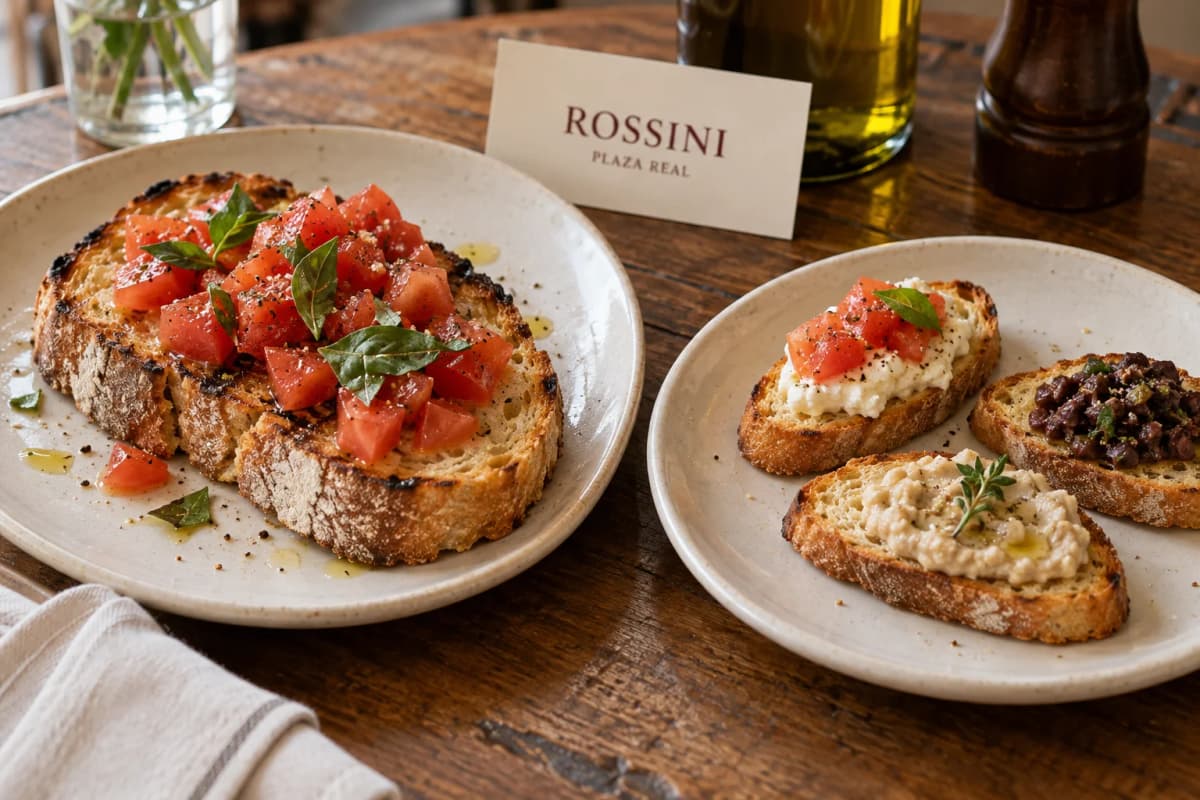
Bruschetta: the strength of rustic peasant bread
The word bruschetta comes from the Roman dialect bruscare, which means "to toast over coals".
-
The origin: It originated as a dish of leftovers among farmers and peasants in central Italy (Lazio, Umbria, and Tuscany) to make use of stale bread from previous days.
-
The bread and the technique: Thick slices of rustic sourdough bread (pane casereccio) are used. The bread is toasted over high heat or on a grill until the surface becomes crispy while the center retains some crumb. Immediately after toasting, the hot surface is vigorously rubbed with a clove of raw garlic and dressed with plenty of extra virgin olive oil and a pinch of salt.
-
The topping: The classic accompaniment is fresh tomatoes diced small with basil and oregano.
Crostino: the elegance of noble cuts
On the other hand, crostino (in plural, crostini) has a more refined history, linked to the court cuisine of regions like Tuscany and Piedmont during the Renaissance.
-
The bread and the technique: It is made with much smaller, thinner, and more delicate slices obtained from narrower loaves of bread (like baguettes or fine white breads). The bread is toasted very thin until it becomes completely crispy.
-
The topping: Since the bread is more delicate, it is used as a base for spreading elaborate creams, such as Tuscan chicken liver pâté (crostini neri), mushroom creams, or purees of legumes.
The art of sharing at ROSSINI
At ROSSINI restaurant, crispy toasted bread starters are prepared on the spot with artisanal bread, fresh garlic, and ripe garden tomatoes. Placing a serving of bruschettas in the center of the table while enjoying an appetizer or a glass of wine is the perfect ritual to break the ice at a dinner among friends or as a couple under the arches of Plaza Real.
Sources
- https://www.accademiaitalianadellacucina.it/
- https://www.lacucinaitaliana.com/italian-food/how-to-do/bruschetta-vs-crostini-difference
- https://www.eater.com/
