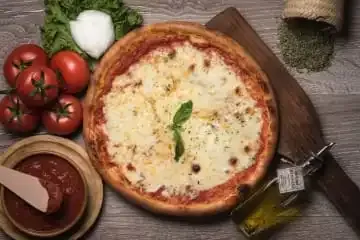
The History and Curiosities of the Margherita Pizza
Italian pizzas, such as the famous Margherita, are undoubtedly the most faithful representation of the appeal of Italian cuisine and the quality of its doughs. While pizzas have always been the hallmark of Neapolitan cuisine, their history goes far beyond their contemporary reputation.
As a tribute to one of the most classic pizzas of our restaurant Rossini, we have prepared a comprehensive article dedicated to the stories and curiosities of the Margherita pizza. Discover the mystery surrounding it and the importance of its existence.
Table of Contents
The Origins of the Margherita Pizza
For many Italians, the Margherita pizza symbolizes the simplicity of their craft and the majesty of its form. However, its legacy goes far beyond its association with Queen Margherita of Savoy, as many popular tales have suggested over the years.
Many pizza ingredients originated in the Indies, which explains their earlier introduction than commonly assumed. Roman legionaries, for example, had a primitive dish similar to unleavened bread with a special dough where various toppings or ingredients could be added.
As described in our article, “Italian Pizzas Inspired by Rossini’s Italian Restaurant,” the origin of the first Margherita pizza and other unnamed pizzas dates back to 1554 in the alleys of Naples with the emergence of street pizzaiolos (pizza makers).
The Controversy of the Margherita Pizza Recipe
According to official accounts, the secret of the original pizza recipe lies in the diet of the Italian lower class, who, like the Roman legionaries, baked bread similar to focaccia with toppings like yeast, lard, cheese, and later, tomato.
Over time, this humble dish was refined to cater to royalty, as King Ferdinand IV popularized it in his court upon discovering it in 1672. This led to the emergence of Italian trattorias across the country and later, pizzerias.
A Pizza That May Not Have Belonged to the Queen
Recent investigations show that the original Margherita pizza recipe, like many other Neapolitan pizzas, is found in the writings of Francesco De Bouchard (1886), a personal cookbook that compiled various recipes. In 1889, master pizzaiolo Raffaele Esposito prepared a special pizza to honor Queen Margherita Teresa of Savoy and took credit for it. However, debates continue about whether Esposito was truly invited to present his pizza to the queen.
A Simple Recipe with Many Meanings
The ingredients of the Margherita pizza consist of tomato, mozzarella, fresh basil, salt, and olive oil. These ingredients were chosen deliberately, as Esposito wanted to showcase the colors of the Italian flag to impress the queen and the nobility. Despite its simplicity, the Margherita pizza was one of the first to include mozzarella, a game-changing addition to Italian gastronomy.
The Unexpected Commercial Appeal of the Margherita Pizza
Following the 1929 Wall Street Crash, many restaurants began spreading rumors about the mysterious origins of dishes as a marketing strategy. Just like the story of Tiramisu, the mystery surrounding the Margherita pizza helped generate curiosity among gourmet diners, boosting business through word of mouth.
Beyond the Memories of War
While Italian pizzas did not gain much popularity before World War II, during the conflict, many American soldiers visited regions like Naples and were treated to local pizzas. After the war, these soldiers popularized pizza recipes in the United States, helping many Italian-American restaurants include them on their menus due to rising demand.
Conclusion
The Margherita pizza is the quintessential representative of Neapolitan cuisine. Its simplicity of ingredients yet depth of flavor has made it one of the most cherished gems of our restaurant Rossini. A pizza that will undoubtedly captivate your palate with its timeless essence.
