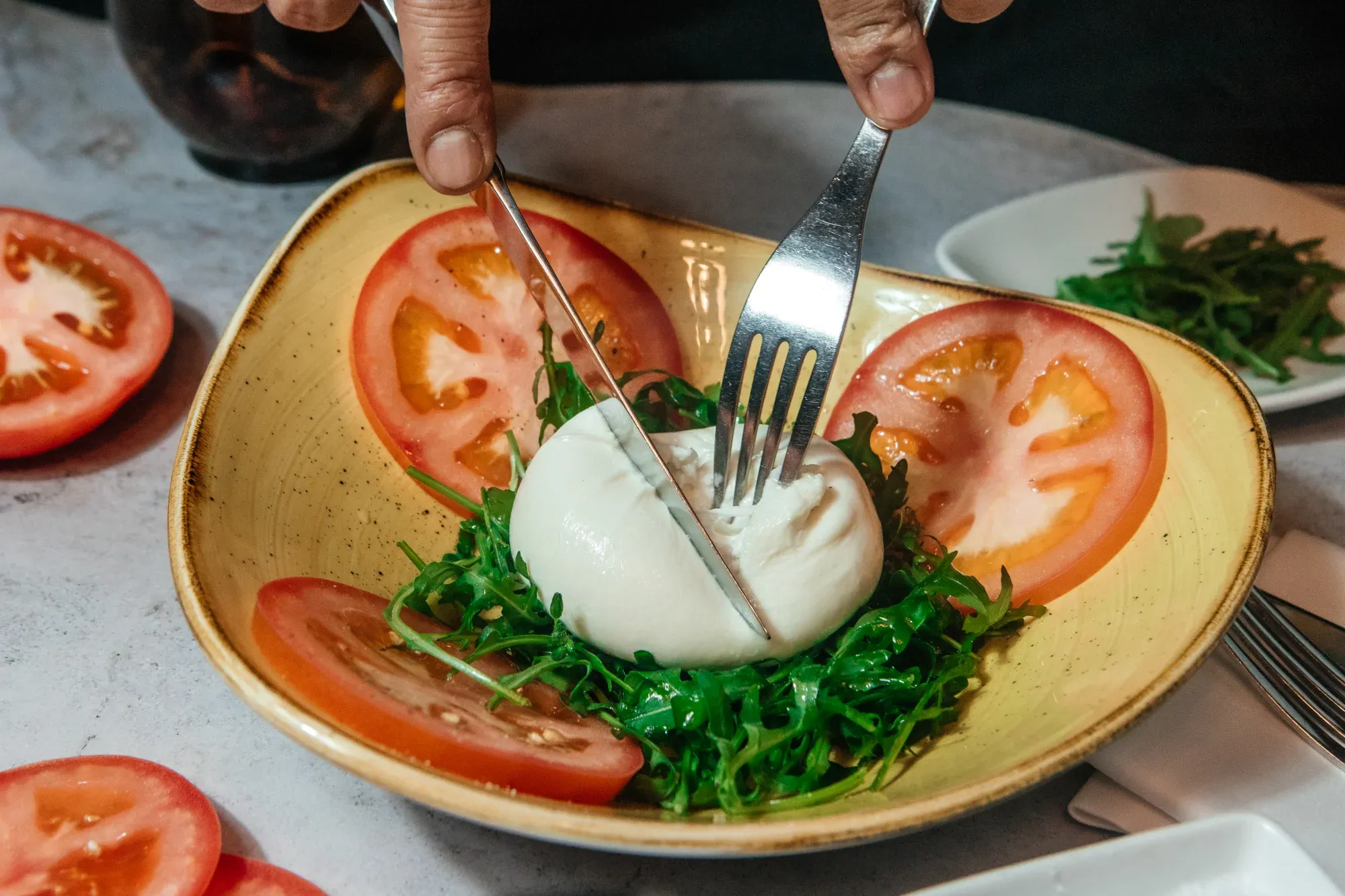
This Italian cheese, which has crossed borders to delight even the most discerning palates, is much more than a simple dairy product. With its smooth exterior and creamy center, burrata is a gastronomic experience in itself. At Rossini, the quintessential Italian restaurant, we honor this delicacy with creations that elevate its flavor to the highest expression.
How Is Burrata Eaten?
- In Salads: Burrata is expertly combined in Italian salads, mixing with ripe tomatoes, fresh basil, and arugula, among other ingredients. At Rossini, our star salad pairs the creaminess of burrata with the freshness of RAF tomatoes and the peppery kick of arugula. Discover it on our menu.
- On Pizza: Burrata, paired with mozzarella and other classic Italian ingredients like mortadella and cherry tomatoes, becomes a true feast atop a pizza. At Rossini, our "Burratina e Mortadella" pizza pays homage to Italian tradition with an explosion of authentic flavors. Try this delight.
- With Pasta: The creamy texture of burrata perfectly complements fresh pasta, whether in a simple tomato and basil sauce or an indulgent truffle sauce. In Italian cuisine, burrata often accompanies dishes like ricotta and spinach ravioli or fresh tagliatelle with pomodoro sauce. Check out our options.
Burrata Characteristics
Flavor
The flavor of burrata is a combination of the milky freshness of mozzarella with the richness and creaminess of cream. It is soft and delicate, with a subtle sweetness that melts into a slight tang. Its flavor profile is balanced and harmonious.
Texture
The texture of burrata is one of its most distinctive and enticing characteristics. On the outside, it features a firm, elastic skin reminiscent of fresh mozzarella. However, its true treasure lies within: when cut, it reveals an exquisite creaminess, almost like a blend of cream and butter, flowing gently when handled.
Origin and Production
Burrata, originating in the Apulia region of Italy, is an artisanal cheese dating back to the 20th century. Its production involves forming an outer skin from cow’s milk curd or a mix of cow’s and buffalo milk curd, which is then filled with a mixture of curd and fresh cream. Learn more about its artisanal production.
Consumption
Burrata is best enjoyed fresh and at room temperature to fully appreciate its flavor and texture. However, there are times when its consumption is not recommended. Due to its high dairy content and creamy texture, burrata is sensitive to high temperatures and prolonged exposure to heat. It is advisable to avoid leaving it unrefrigerated for long periods, especially in warm climates, to prevent bacterial contamination and maintain its freshness and quality. Read more about safe storage here.
At Rossini, we take pride in offering our diners an authentic Italian experience, where burrata holds a prominent place on our menu. Come and discover the magic of this extraordinary cheese in every bite. Book your table now
