Lazio: History, Curiosities, and Gastronomy
Lazio, also known as Latium in ancient times, is one of the Italian regions comprising four provinces: Frosinone, Latina, Viterbo, and Rieti. At its heart lies Rome, the eternal city and capital of Italy, a symbol of Roman supremacy and its imposing legacy.
The region attracts millions of tourists from all over the world every year, who visit its cities to immerse themselves in its cultural heritage, visible in its architectural monuments, Italian gastronomy, natural landscapes, and museum collections.
In this article, beyond showcasing what is already known about Lazio, we’ll reveal the hidden secrets and curiosities of this Italian region and its exquisite gastronomy, which is an essential part of our Italian dishes.
Beyond the Myths
Although it may not seem so, both Roman and Greek mythology are inspired by real places in the Lazio region that can still be visited today, as if you were the protagonist of history.
The most important myth of this region is the birth of Romulus and Remus and the founding of Rome after the Latin wars. Various places, such as the Pontine Islands, have been identified as settings for epic stories like the Odyssey, notably the island of the sorceress Circe. Today, there are tourist routes inspired by these texts that can be explored with the help of a local guide.
The Forest of Monsters
In northern Lazio lies Bomarzo, a sacred forest featuring a 16th-century architectural ensemble inhabited by various grotesque mythological creatures carved in stone. These works were created by the artist Michelangelo Buonarroti and are dedicated to the deities and creatures of Greek and Roman mythology.
The Dying City
Civita di Bagnoregio is a small hilltop village over 2,500 years old. Known as "the dying city" due to erosion, this fortress is a historical treasure situated between Florence and Rome.
The Culinary Legacy of the Eternal City
The cuisine of Lazio is a heritage of Roman gastronomic art, constantly reinvented through the use of simple ingredients typical of the Mediterranean diet. Some of its most emblematic dishes include:
- Penne Arrabbiata: A spicy pasta dish made with a sauce of tomato, garlic, pepper, and red chili.
- Pasta alla Carbonara: A traditional sauce made with eggs, cheese, oil, pancetta, and black pepper.
- Abbacchio: A roasted lamb dish from Sardinia, seasoned with spices and served during family celebrations.
- Saltimbocca alla Romana: Veal with ham, sage, and a touch of white wine.
- Pangiallo Romano: A sweet bun coated in dark chocolate, traditionally consumed during the Roman winter solstice rituals and now a Christmas treat.
- Amaretti: Small cookies filled with almonds and apricot, often served with honey or milk. Each Italian region has its own version of this dessert.
A Taste of the Roman Summer
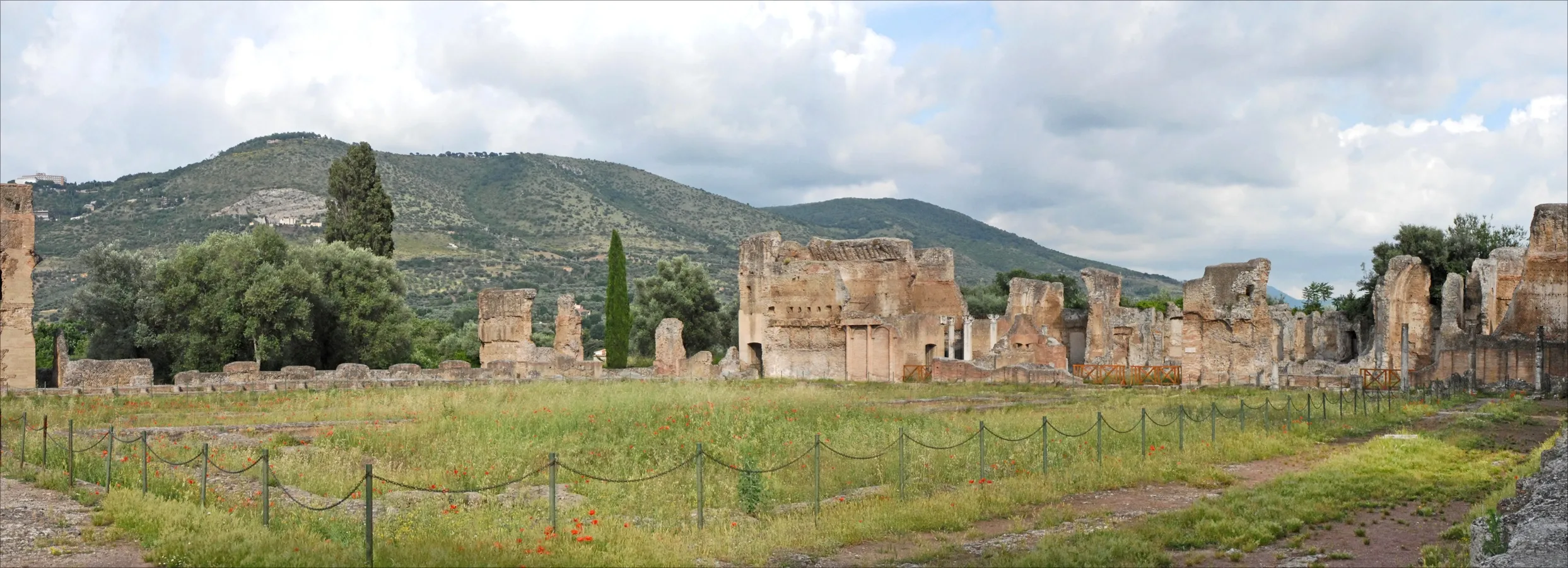
Across the Lazio region, you can find many ruins of ancient Etruscan and Roman settlements, preserving some of the summer villas once inhabited by notable figures such as Emperor Hadrian, the philosopher-emperor Marcus Aurelius, or Emperor Commodus.
The most important site is Villa Adriana, a "resort of Roman buildings" that served as a vacation residence for Emperor Hadrian and his successors. Among the remains of its 30 buildings are a palace modeled after Athens (Hadrian’s favorite city), an academy, a casino, baths, a temple to Venus, a theater, and a barracks. It is now a UNESCO World Heritage Site.
A Country Within Another
Near Rome lies Vatican City, a territory governed by the Pope since 1929. This small state, barely 4 kilometers wide, was once an Etruscan hill settlement known as Vaticum.
Interestingly, the Papal States (the Vatican’s former name) had a much larger territorial extension in the past and participated in significant historical events, such as Charlemagne's conquests and the expansion of the Holy Roman Empire.
Discover more curiosities and delicious Italian dishes at our Rossini restaurant, bringing the best of Lazio to the heart of Barcelona!
