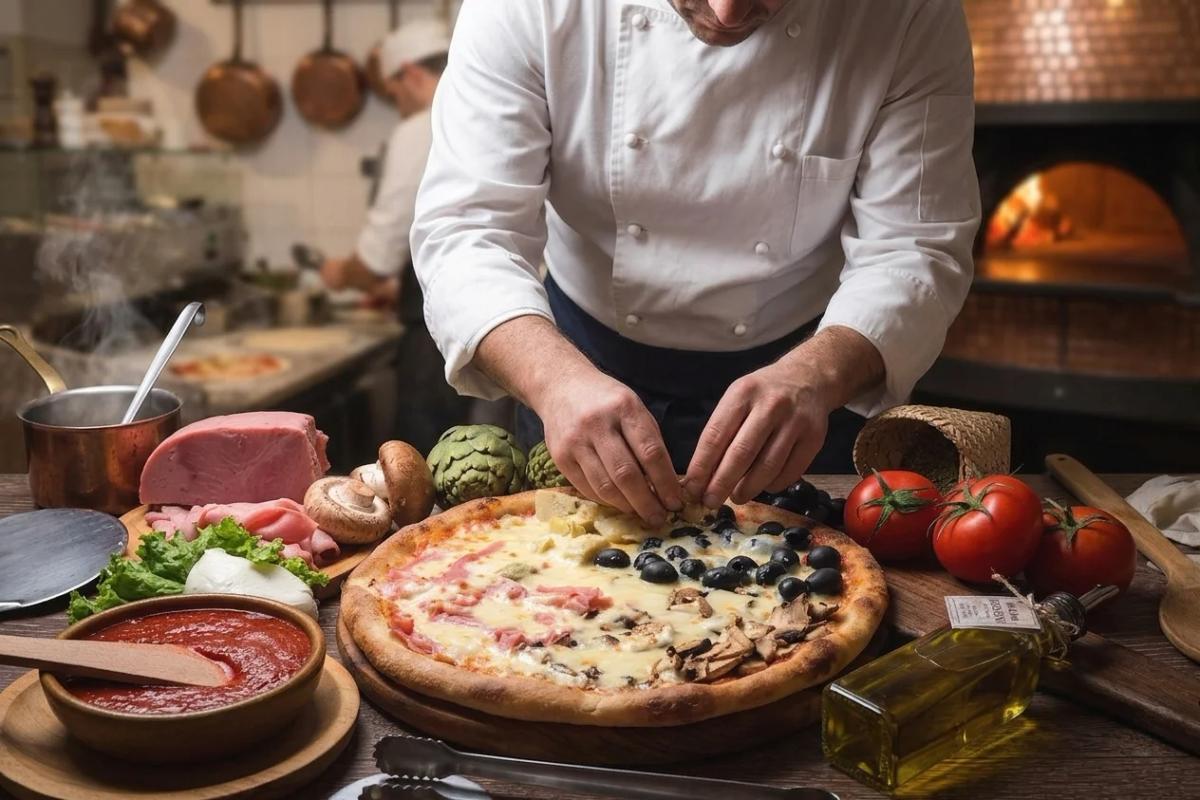
To understand what makes a pizza truly exceptional, we must trace its roots back to the Mediterranean basin. Long before it became a global culinary phenomenon, flatbreads served as fundamental edible plates for ancient civilizations. From the plakous of classical Greece to the focaccia of the Roman Empire, human history has always revolved around baked grain doughs topped with wild herbs, oils, and local cheeses.
However, the true birth of pizza as we know it today took place in Naples during the 18th century. What began as a humble and accessible food for the working class in the streets of Campania was forever transformed with the arrival of the tomato from America. Neapolitan bakers (pizzaioli) perfected the harmonious union between fermented wheat, sweet volcanic tomatoes, and fresh buffalo mozzarella. In 1889, legend has it that pizzaiolo Raffaele Esposito created the famous Pizza Margherita to honor Queen Margherita of Savoy, recreating the colors of the Italian flag: the red of the tomato, the white of the mozzarella, and the green of the basil. What started as street food evolved into a revered culinary discipline that UNESCO declared an Intangible Cultural Heritage of Humanity.
2. How it is made: Science, patience, and the ritual of fermentation
An authentic Italian pizza is much more than a simple combination of flour, water, yeast, and salt. The real secret lies in a delicate balance between biochemistry, time, and manual technique; a process that industrial fast food production can never replicate.
-
The selection of flour and hydration:
It all starts with high-strength Italian wheat flours (such as Tipo 0 or Tipo 00), rich in quality proteins that create a resilient gluten network. A high level of hydration (between 65% and 75% water) ensures that the dough remains moist, elastic, and flexible.
-
The patience of slow fermentation:
Time is the most critical ingredient. Instead of speeding up the process with excess yeast, authentic artisan dough undergoes a cold maturation of between 24 and 48 hours. During this rest, natural enzymes break down complex starches and proteins into simple sugars and amino acids. This transformation provides two fundamental advantages: a flavor of great depth and a light, digestible dough that does not cause heaviness.
-
The work of air (Il Cornicione):
A master pizzaiolo never uses a rolling pin, as this would crush the delicate gas bubbles generated during fermentation. Instead, the dough is stretched manually from the center to the edges, gently guiding the air towards the ends. This technique creates the characteristic raised and fluffy edge known as cornicione, which inflates instantly upon contact with the heat of the oven.
3. How Rossini is involved: The artisan experience in Plaza Real
At Restaurant Rossini, we understand that serving a pizza is not just about assembling ingredients on dough; it represents a daily commitment to the importance of Italian culinary tradition within the historical framework of Barcelona's Gothic Quarter. In our kitchen, respect for traditional techniques merges with a constant pursuit of culinary excellence to offer an unforgettable experience.
-
The fermentation lab and our own time:
Every morning, our team prepares the dough using selected milling wheat flour and temperature-controlled water. Our dough rests under the exclusive technique of our chef, allowing the yeast to work without stress to achieve perfect fermentation. This process ensures that every base served at Rossini offers that ethereal texture: a rough, crispy edge on the outside and extremely tender on the inside, which does not saturate or create the typical heaviness of fast preparations.
-
Selection of ingredients and flavor traceability:
Every product that crowns our pizzas has been selected for maximum fidelity to traditional recipes. We make our base sauce with select tomatoes harvested at their peak of sweet ripeness, providing a natural acidity that balances the fat of the cheeses. We use high quality mozzarella for its ability to melt evenly without adding excess moisture to the dough, and we incorporate artisanal cured meats and fresh vegetables that are placed at just the right moment, either before entering the fire or as they come out, to preserve their essential oils, aromas, and textures intact.
-
The craft of the pizzaiolo and the magic of baking:
The stretching of each pizza at Rossini is done on the spot and 100% manually. The hands of our master pizzaioli caress the dough with precise movements, guiding the air bubbles outward to shape the iconic cornicione. Baking at high temperature seals the interior moisture of the dough in a matter of minutes, achieving that perfect contrast between the firm base and the airy edge with subtle toasted nuances.
-
A unique setting under the neoclassical arches:
Gastronomy is not only tasted; it is also experienced through the environment. Enjoying a freshly made artisan pizza on the outdoor terrace of Rossini, sheltered by the iconic neoclassical porticos of Plaza Real, adds an intangible value to the meal. The sound of the fountains, the golden light filtering through the palm trees, and the cosmopolitan atmosphere of Barcelona combine with the culinary proposal to transform a meal or dinner into a memorable memory.
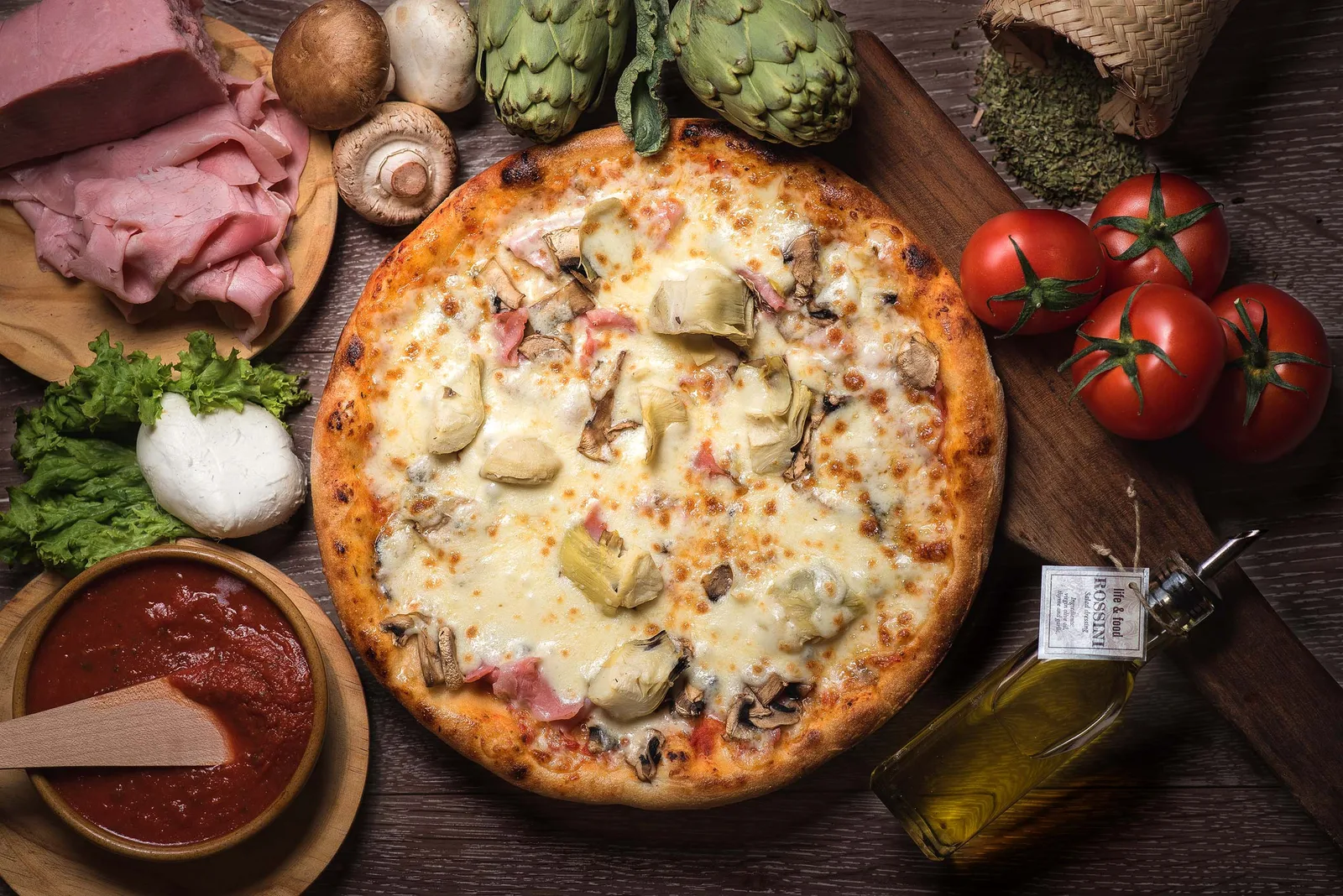
Come discover our menu
Do you want to see how we bring this ancestral tradition to our specialties and house combinations?
Click here to explore our complete menu and discover our pizzas at Rossini
